


Signs of a Main Water Line Leak on Your Property

A sudden increase in your water bill can be frustrating. So can low water pressure, unexplained wet spots in your yard, or an area of grass that stays unusually green.
Sometimes these problems are caused by a leaking main water line.
The main water line carries water from your property’s water meter into your home. Because much of this line is underground, a leak can develop without producing an obvious puddle or visible pipe damage.
A small leak can waste water continuously and may eventually damage landscaping, soil, driveways, walkways, or other parts of your property.
The good news is that there are warning signs you can watch for.
In this guide, we’ll explain the most common signs of a main water line leak, how to perform a basic water meter test, when professional leak detection is appropriate, and what to do if you suspect a leak.
What Is a Main Water Line?
Your main water line is the pipe that delivers water from the water meter to your home.
The exact layout varies by property, but the line generally runs underground from the meter toward the house and connects to the home’s plumbing system.
Unlike leaks from a faucet, toilet, or supply line under a sink, a main water line leak may be:
- Underground
- Hidden beneath soil or landscaping
- Beneath a driveway or walkway
- Near the foundation
- Difficult to see from inside the home
- Located between the water meter and the house
Because the pipe is underground, the first indication may not be visible water. Instead, homeowners often notice a change in water usage, pressure, landscaping, or soil conditions.
8 Signs of a Main Water Line Leak
1. Your Water Bill Suddenly Increases
One of the most common warning signs is an unexplained increase in water usage.
If your household habits haven’t changed but your water bill suddenly becomes much higher, an underground leak could be responsible.
Look for:
A sudden increase compared with previous bills
Higher usage despite similar household activity
Increasing water consumption month after month
Unexpected usage when nobody is home
Higher bills during a period when outdoor watering hasn’t increased
Before assuming the main water line is leaking, check toilets, faucets, irrigation systems, water heaters, and other fixtures.
If you cannot find an obvious source, an underground leak investigation may be appropriate.
Why does a main line leak increase your water bill?
A pressurized water line can continue losing water around the clock. Even a relatively small leak can result in significant water loss over time.
2. Unusually Green or Lush Areas of Your Yard
Does one section of your lawn look greener than everything around it?
An underground water leak can sometimes provide additional moisture to the soil, causing vegetation above or near the leak to grow differently.
Look for:
-
-
One unusually green patch of grass
-
-
-
Vegetation growing faster in one area
-
-
-
Plants thriving where they normally struggle
-
-
-
A consistently damp section of landscaping
-
-
-
A strip of green vegetation following the approximate path of a water line
-
However, a lush area doesn’t automatically mean you have a main water line leak.
It could also indicate an irrigation problem, drainage issue, or natural variation in soil moisture.
The location and other symptoms should be considered together.
3. Wet or Muddy Areas When It Hasn’t Rained
Unexplained moisture is another important warning sign.
If a section of your property remains wet despite dry weather, investigate further.
You might notice:
-
-
Muddy soil
-
-
-
Standing water
-
-
-
Damp patches
-
-
-
Soft ground
-
-
-
Water bubbling or surfacing from the soil
-
-
-
Moisture around a driveway or walkway
-
Pay particular attention if the wet area appears along the suspected route of the main water line.
A continuously wet area can have several causes, including irrigation leaks, drainage problems, groundwater, or plumbing leaks. Professional testing can help determine the source.
4. Low or Inconsistent Water Pressure
A main water line problem can sometimes affect water pressure throughout the house.
You may notice:
-
-
Weak pressure from multiple faucets
-
-
-
Pressure that suddenly becomes lower than normal
-
-
-
Shower pressure dropping when another fixture is used
-
-
-
Pressure that varies unexpectedly
-
-
-
Poor flow at several fixtures at the same time
-
If only one faucet has low pressure, the problem may be isolated to that fixture.
But if multiple fixtures throughout the property suddenly have reduced pressure, the main supply line or another part of the home’s plumbing system may need to be investigated.
Low pressure can have many causes, so it shouldn’t automatically be attributed to a leak.
5. Cracks or Erosion Around Your Driveway or Walkways
Water escaping underground can change soil conditions around the affected area.
Over time, this may contribute to:
-
-
Soil erosion
-
-
-
Settling
-
-
-
Small depressions
-
-
-
Cracks around concrete
-
-
-
Uneven sections of a walkway
-
-
-
Gaps developing around hardscaping
-
For example, you might notice a section of driveway beginning to settle while the surrounding concrete remains stable.
This doesn’t necessarily mean you have a water line leak. Concrete naturally cracks and soil can settle for many reasons.
However, new ground movement combined with unexplained moisture or increased water usage deserves attention.
6. You Hear Water Running When Everything Is Turned Off
This is one of the easiest signs for a homeowner to investigate.
Turn off:
-
-
Faucets
-
-
-
Showers
-
-
-
Washing machines
-
-
-
Dishwashers
-
-
-
Irrigation
-
-
-
Other water-consuming appliances
-
Then listen carefully.
If you can hear water moving through your plumbing when no fixture is operating, you may have an active leak.
You can also check your water meter.
If the meter continues registering water usage while everything inside and outside the property is off, water is flowing somewhere.
That doesn’t automatically prove that the main water line is leaking—it could be another fixture or plumbing component—but it is a strong reason to investigate.
7. Sinkholes, Depressions, or Soft Soil Appear
An underground leak can sometimes affect the soil surrounding a damaged pipe.
You may notice:
-
-
A small depression developing in the yard
-
-
-
Soft soil
-
-
-
Soil washing away
-
-
-
A trench-like depression
-
-
-
Landscaping sinking
-
-
-
A section of ground becoming unusually unstable
-
If the affected area is close to the path between your water meter and home, the main water line should be considered as one possible source.
Avoid walking repeatedly on severely softened ground until the cause is understood, particularly if there is significant erosion.
8. Water Appears Near the Foundation or Where the Line Enters the Home
Another potential warning sign is unexplained moisture near the point where the water service enters your property or home.
You might see:
-
-
Wet soil near the foundation
-
-
-
Water collecting near the service entry point
-
-
-
Dampness around the foundation
-
-
-
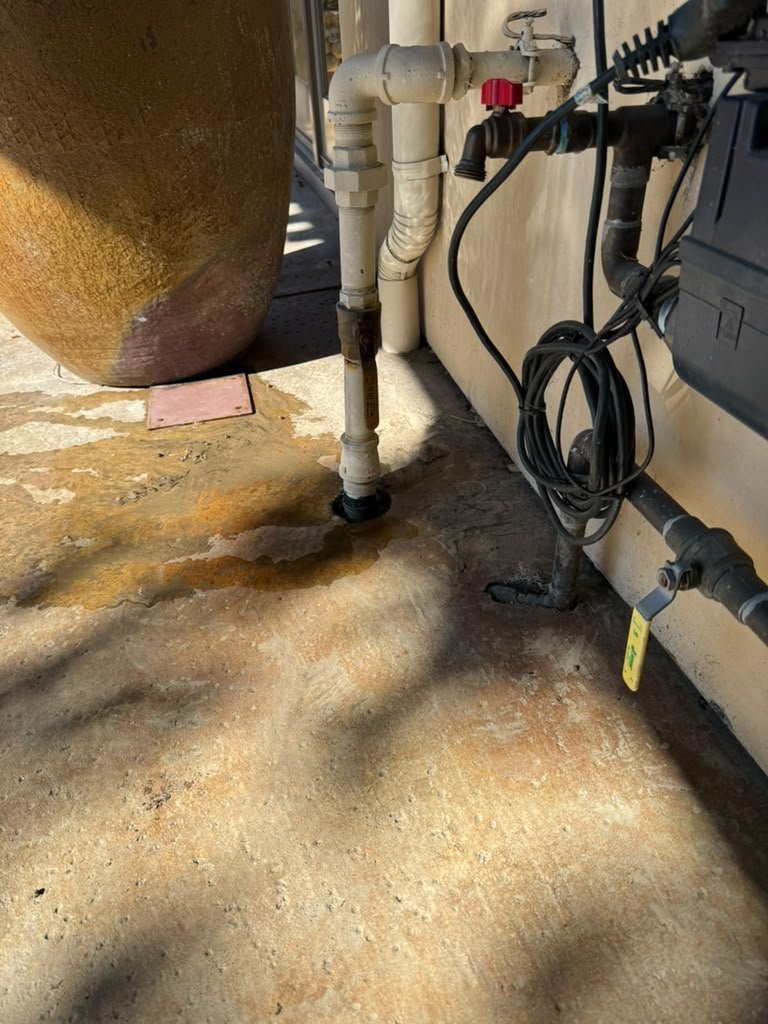
Unexpected water near the meter
-
-
-
Moisture appearing along the suspected pipe route
-
If water is coming from a pressurized supply line, it may travel underground before reaching the surface.
That means the visible wet spot may not be directly above the actual leak.
This is one reason underground leak detection can be useful when the source isn’t obvious.
How to Check for a Possible Main Water Line Leak
Before calling a professional, you can perform a simple preliminary check.
Step 1: Turn Off Water Use
Make sure nobody is:
-
-
Using faucets
-
-
-
Flushing toilets
-
-
-
Running a washing machine
-
-
-
Running a dishwasher
-
-
-
Taking a shower
-
-
-
Using irrigation
-
-
-
Filling a pool
-
Also account for appliances that may automatically use water.
Step 2: Check Your Water Meter
Look at the water meter and note its reading.
Many meters have a flow indicator that moves when water is being used.
With all water sources turned off, watch the meter.
If the meter continues moving:
Water is flowing somewhere on the property.
That doesn’t automatically identify the main water line as the problem. You still need to determine where the water is going.
Step 3: Wait and Check Again
For a more useful comparison, record the meter reading and check it again after a period when there should have been no water use.
A change in the reading indicates water consumption occurred during that period.
If you’re unsure how to interpret your meter, your water utility’s instructions can help.
Main Water Line Leak vs. Other Plumbing Leaks
Not every unexplained increase in water usage comes from the main water line.
|
|
|---|---|
|
|
|
|
|
|
|
|
|
|
|
|
|
|
|
|
The purpose of these signs is to help you identify when further investigation is warranted—not to diagnose the exact source yourself.
Where Do Main Water Line Leaks Commonly Occur?
The location depends on the property’s plumbing configuration, pipe material, age, soil conditions, and previous repairs.
Potential problem areas include:
Between the water meter and the house
This is the section many homeowners associate with a main water line leak.
Under landscaping
A leak may remain hidden beneath grass, plants, mulch, or soil.
Beneath driveways and walkways
Leaks beneath hard surfaces can be particularly difficult to locate without specialized equipment.
Near the foundation
Water may collect or migrate toward the foundation even when the actual leak is farther away.
At pipe connections
Joints, fittings, and transitions can become potential failure points.
What Causes Main Water Line Leaks?
Several factors can contribute to underground water line problems.
Aging Pipes
Older plumbing materials can deteriorate over time.
Corrosion
Some types of metal piping can corrode and eventually develop leaks.
Soil Movement
Changes in surrounding soil can put stress on underground pipes.
Tree Roots
Roots can affect underground utility areas and may contribute to problems depending on the pipe and surrounding conditions.
Ground Movement
Changes in the ground can place stress on buried plumbing.
Poor Installation or Previous Repairs
Improperly installed or repaired sections may eventually develop problems.
Pressure and Pipe Stress
Water pressure, pipe condition, and other plumbing factors can contribute to failures.
Can a Main Water Line Leak Damage Your Property?
It can.
The potential consequences depend on the size, location, duration, and severity of the leak.
An underground leak may contribute to:
-
-
Soil erosion
-
-
-
Landscaping damage
-
-
-
Water waste
-
-
-
Ground settlement
-
-
-
Damage around hardscaping
-
-
-
Moisture near structures
-
-
-
Increased water bills
-
-
-
Plumbing complications
-
The sooner an active leak is identified, the sooner you can determine the appropriate repair.
When Should You Call a Professional Leak Detection Company?
Consider professional leak detection when:
-
-
Your water meter shows unexplained water usage
-
-
-
Your water bill has increased without an obvious reason
-
-
-
You have persistent wet soil
-
-
-
A section of your property remains unusually green
-
-
-
Multiple fixtures have unexplained pressure problems
-
-
-
You suspect an underground leak
-
-
-
You cannot identify the source of water loss
-
-
-
The suspected leak is beneath concrete or landscaping
-
Professional leak detection can help determine whether a leak is present and where it is located without unnecessarily excavating large areas of your property.
How Professional Main Water Line Leak Detection Works
The exact process depends on the property and suspected leak.
A professional may begin by:
1. Reviewing the Symptoms
The technician may ask about:
-
-
Water bill changes
-
-
-
Water pressure
-
-
-
Wet areas
-
-
-
Landscaping changes
-
-
-
Previous plumbing problems
-
-
-
When the symptoms began
-
2. Checking the Water Meter
The technician can evaluate whether water is flowing when expected water sources are shut off.
3. Inspecting the Property
The suspected route of the water line is examined for visible signs of water loss or soil disturbance.
4. Using Specialized Detection Equipment
Depending on the situation, professional technicians may use acoustic listening equipment, electronic leak detection technology, thermal imaging, pressure testing, or other methods.
5. Narrowing Down the Leak Location
The objective is to identify the likely leak location before excavation or repair begins.
This can help reduce unnecessary digging and make it easier for a plumber or repair contractor to access the affected section.
Can You Find a Main Water Line Leak Without Digging Up Your Yard?
Sometimes.
The ability to locate an underground leak without excavation depends on:
-
-
Pipe material
-
-
-
Leak size
-
-
-
Water pressure
-
-
-
Soil conditions
-
-
-
Surface conditions
-
-
-
Depth of the pipe
-
-
-
Accessibility
-
-
-
Background noise
-
-
-
Location of the leak
-
Professional detection equipment can sometimes narrow down the suspected location before excavation.
However, no detection method can guarantee the same accuracy in every property or situation.
What Should You Do If You Suspect a Main Water Line Leak?
If you believe you have an active underground leak:
1. Stop unnecessary water use
This can help limit additional water loss while you investigate.
2. Check the meter
Determine whether water is still being registered when your fixtures are off.
3. Check for obvious sources
Look at toilets, faucets, irrigation, water heaters, and visible plumbing.
4. Document what you’re seeing
Take photographs of:
-
-
Wet soil
-
-
-
Green patches
-
-
-
Cracks
-
-
-
Depressions
-
-
-
Water meter readings
-
-
-
Damaged landscaping
-

Leave a Reply