


5 Signs Your Sprinkler System Has a Hidden Water Leak

Your sprinkler system is designed to deliver water to specific areas of your lawn and landscaping. But when an underground pipe, fitting, valve, or connection develops a leak, water can escape beneath the surface without an obvious broken sprinkler head.
A hidden sprinkler system leak can waste water, increase your water bill, damage landscaping, and create persistently wet areas around your property.
The problem is that underground irrigation pipes are often buried beneath grass, soil, mulch, plants, or hardscape. By the time a leak becomes obvious, water may already have been escaping for some time.
Knowing the warning signs can help you identify a potential problem earlier.
Here are 5 signs your sprinkler system may have a hidden water leak.
1. Your Lawn Has Unusually Wet or Soggy Areas
One of the most noticeable signs of a hidden sprinkler leak is an area of your lawn or landscaping that stays unusually wet.
After your irrigation system runs, some moisture is expected. However, if one particular area remains soggy long after irrigation has stopped, there could be an underground problem.
Look for:
-
Persistent wet patches
-
Muddy soil
-
Small puddles
-
Soft ground
-
Water appearing when the system is not running
-
One section of the yard that is consistently wetter than surrounding areas
A wet area doesn’t automatically mean there is an irrigation leak. Poor drainage, recent rainfall, groundwater, or overspray can also cause excess moisture.
However, if the wet area repeatedly appears in the same location, it is worth investigating.
2. One Area of Your Grass Is Much Greener
Another potential warning sign is a patch of grass that looks noticeably greener or grows faster than the surrounding lawn.
Why can this happen?
An underground irrigation leak may continuously release moisture into the soil. That additional water can make the vegetation above the damaged section appear healthier or greener.
You might notice:
-
A narrow green strip
-
One unusually lush section of lawn
-
Faster grass growth in one area
-
Green vegetation despite otherwise dry conditions
Pay particular attention if the unusually green area follows the approximate route of an underground sprinkler line.
However, landscaping differences, soil composition, fertilizer, sunlight, and normal irrigation patterns can also cause variations in grass color. The pattern becomes more useful when combined with other signs of a leak.
3. Your Water Bill Suddenly Increases
An unexpected increase in water usage is another reason to investigate your sprinkler system.
If your watering schedule hasn’t changed but your water bill suddenly increases, an irrigation leak could be contributing to the additional consumption.
This can happen when a damaged underground pipe allows water to escape every time the irrigation system operates.
Compare your current water usage with previous months and consider:
-
Has your irrigation schedule changed?
-
Have you added new landscaping?
-
Has the weather been unusually hot or dry?
-
Has household water usage increased?
-
Is the increase occurring primarily during irrigation periods?
A higher water bill doesn’t prove that your sprinkler system is leaking, but it can be an important warning sign when combined with wet areas, pressure problems, or unusual sprinkler performance.
4. Your Sprinklers Have Low or Uneven Water Pressure
A hidden leak can sometimes affect how much water reaches your sprinkler heads.
You may notice that one zone doesn’t perform the way it normally does.
Signs can include:
-
Sprinklers spraying less distance
-
Weak water flow
-
Uneven coverage
-
Some sprinkler heads performing normally while others are weak
-
One irrigation zone behaving differently from the others
However, low sprinkler pressure can have several causes.
A clogged sprinkler head, faulty valve, supply restriction, pressure problem, or damaged component can produce similar symptoms.
That’s why it’s important to investigate the system rather than automatically assuming the underground pipe is leaking.
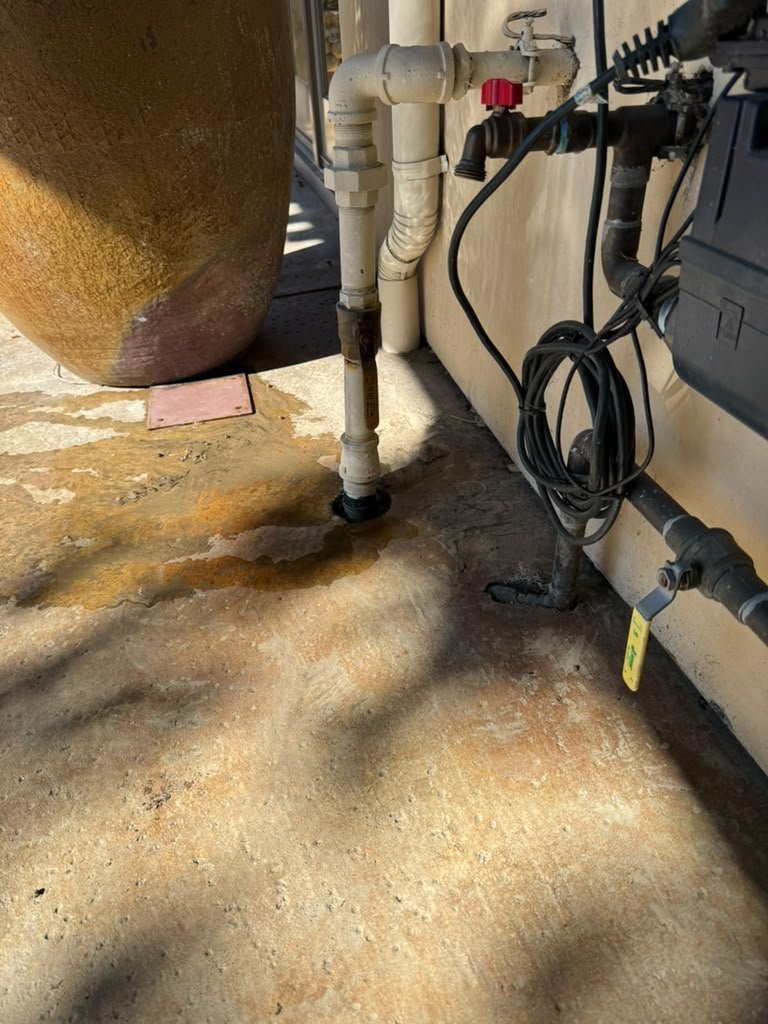
5. Water Is Appearing Where It Shouldn’t
The fifth major warning sign is water appearing in an unexpected location.
For example, you may notice water:
-
Around an irrigation valve box
-
Near a sprinkler line
-
Along a driveway or walkway
-
Near landscaping
-
In an area that isn’t directly beneath a sprinkler head
-
On the surface after the irrigation system has stopped
Water can travel through soil before reaching the surface, so the place where you see water may not be the exact location of the damaged pipe.
This is one reason simply digging where you see water can lead to unnecessary excavation.
A professional inspection can help determine where the irrigation line runs and narrow down the suspected leak location.
How Do You Check for a Hidden Sprinkler Leak?
If you suspect an irrigation leak, you can start with a few basic checks.
Turn the irrigation system off
Make sure the irrigation controller is not running.
Walk through each irrigation zone
Look for wet areas, puddles, erosion, or unexpected water.
Inspect visible sprinkler heads
Check for cracked or broken sprinkler heads and water leaking around their bases.
Check valve boxes
Look for standing water or persistent moisture around irrigation valves.
Monitor your water usage
Compare your current consumption with previous periods.
Observe the system while it runs
Turn on individual zones and watch for areas where water appears unexpectedly.
These checks can help identify obvious problems, but they may not reveal a buried pipe leak.
Why Hidden Sprinkler Leaks Can Be Difficult to Find
The biggest challenge with an underground sprinkler leak is that the damaged section is hidden.
The pipe could be beneath:
-
Grass
-
Soil
-
Mulch
-
Garden beds
-
Trees or plants
-
Driveways
-
Walkways
-
Other landscaping
Additionally, water doesn’t always travel straight upward.
Water escaping from a damaged pipe can move through surrounding soil before appearing at the surface. As a result, the visible wet spot may be several feet away from the actual leak.
That makes guessing the leak location risky.
Can a Sprinkler System Leak Without Creating a Puddle?
Yes.
Not every underground irrigation leak produces an obvious puddle.
If the surrounding soil absorbs the escaping water quickly, you may only notice indirect signs such as:
-
Higher water usage
-
Greener grass
-
Soil that stays damp
-
Reduced sprinkler pressure
-
Uneven irrigation performance
This is why a hidden leak can continue for some time before a homeowner realizes something is wrong.
What Causes Hidden Sprinkler System Leaks?
A sprinkler system can develop leaks for several reasons.
Aging Irrigation Pipes
Underground pipes and fittings can deteriorate over time.
Damaged Connections
Joints and connections can loosen or become damaged, allowing water to escape.
Tree Roots
Growing roots can affect underground irrigation components and surrounding soil.
Ground Movement
Soil settling or movement can put stress on buried pipes and connections.
Accidental Damage
Landscaping, digging, construction, or other outdoor work can damage buried irrigation lines.
Excessive Water Pressure
High pressure can place additional stress on irrigation components and connections.
The actual cause needs to be determined based on the condition and design of the irrigation system.
Hidden Sprinkler Leak vs. Broken Sprinkler Head
Not every irrigation problem requires underground leak detection.
A broken sprinkler head is usually visible. You may see water spraying incorrectly, pooling around the head, or flowing continuously.
A hidden underground leak is different.
| Visible Sprinkler Problem | Hidden Underground Leak |
|---|---|
| Damage may be visible | Pipe may be completely underground |
| Water often appears around sprinkler | Water may surface elsewhere |
| Easier to inspect visually | Exact source may be difficult to identify |
| May involve the sprinkler head | May involve pipe, valve, or connection |
| Replacement may solve the problem | Location may need professional detection |
Checking the visible components first is a good starting point. If the problem remains unexplained, professional detection may be appropriate.
When Should You Call a Professional?
Consider professional irrigation leak detection if:
-
Your water bill has increased unexpectedly
-
Your lawn has persistent wet areas
-
One part of your lawn is unusually green
-
Sprinkler pressure has decreased
-
One irrigation zone behaves differently
-
Water appears when the system isn’t running
-
You can’t find a visible broken sprinkler head
-
You suspect an underground pipe is leaking
-
You’ve already inspected the visible components but the problem continues
The goal is to identify the source before unnecessary digging begins.
How Professional Irrigation Leak Detection Helps
Professional detection focuses on determining whether water is escaping and where the suspected leak is located.
Depending on the property and irrigation system, a technician may:
-
Review the symptoms you’ve observed.
-
Inspect visible sprinkler components.
-
Check individual irrigation zones.
-
Identify the underground pipe layout.
-
Perform appropriate diagnostic testing.
-
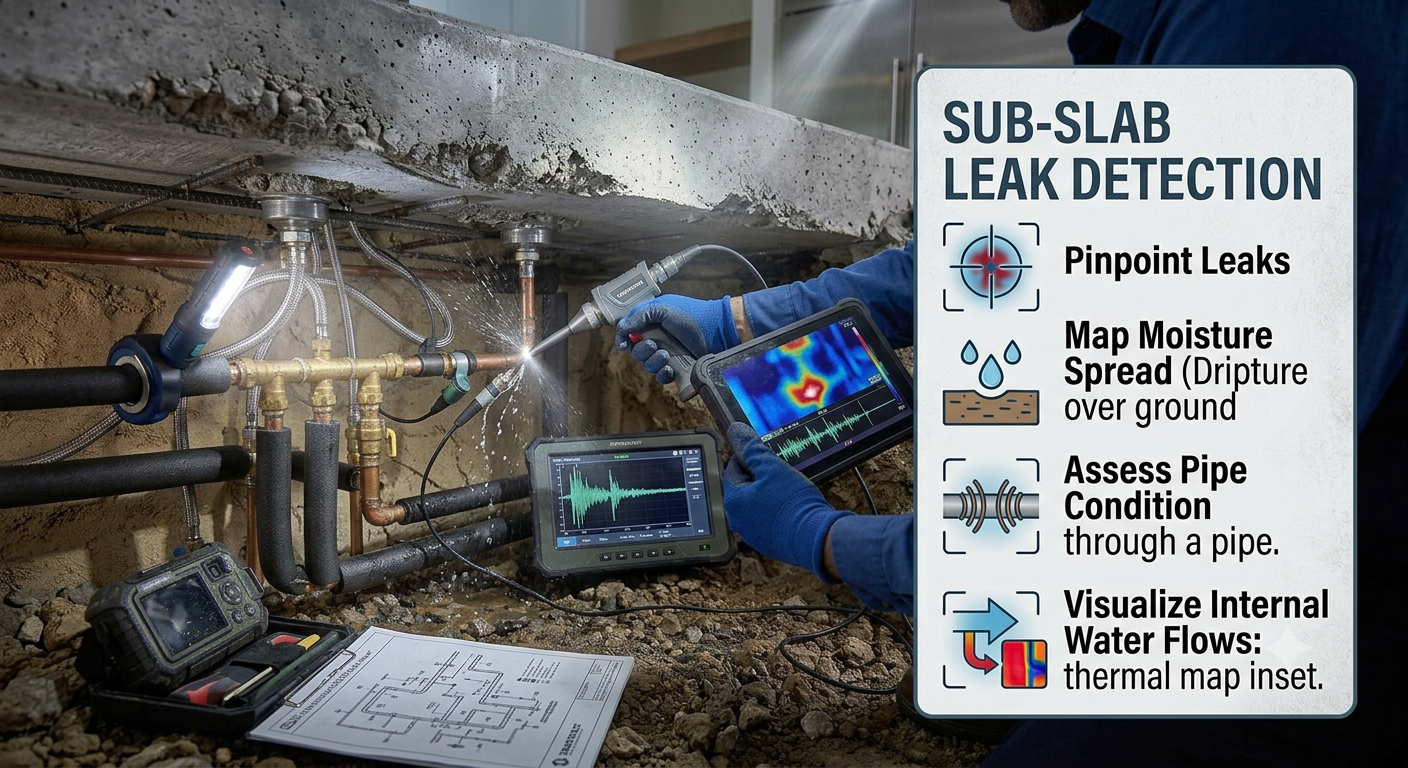
Use specialized detection and pipe-locating equipment.
-
Narrow down the suspected leak location.
-
Help determine the appropriate repair.
Water Shield Leak Detection uses specialized leak detection technology and electronic pipe locating among its available detection methods, depending on the situation. (Water Shield Leak Detection)
The objective is to locate the problem as accurately as possible before excavation or repair.
Why Early Irrigation Leak Detection Matters
An irrigation leak may seem minor compared with a major plumbing leak inside the house, but continuous water loss can still become expensive.
A hidden leak can contribute to:
-
Water waste
-
Higher utility bills
-
Soil erosion
-
Damaged landscaping
-
Persistently muddy areas
-
Uneven ground
-
Additional irrigation system problems


Leave a Reply