


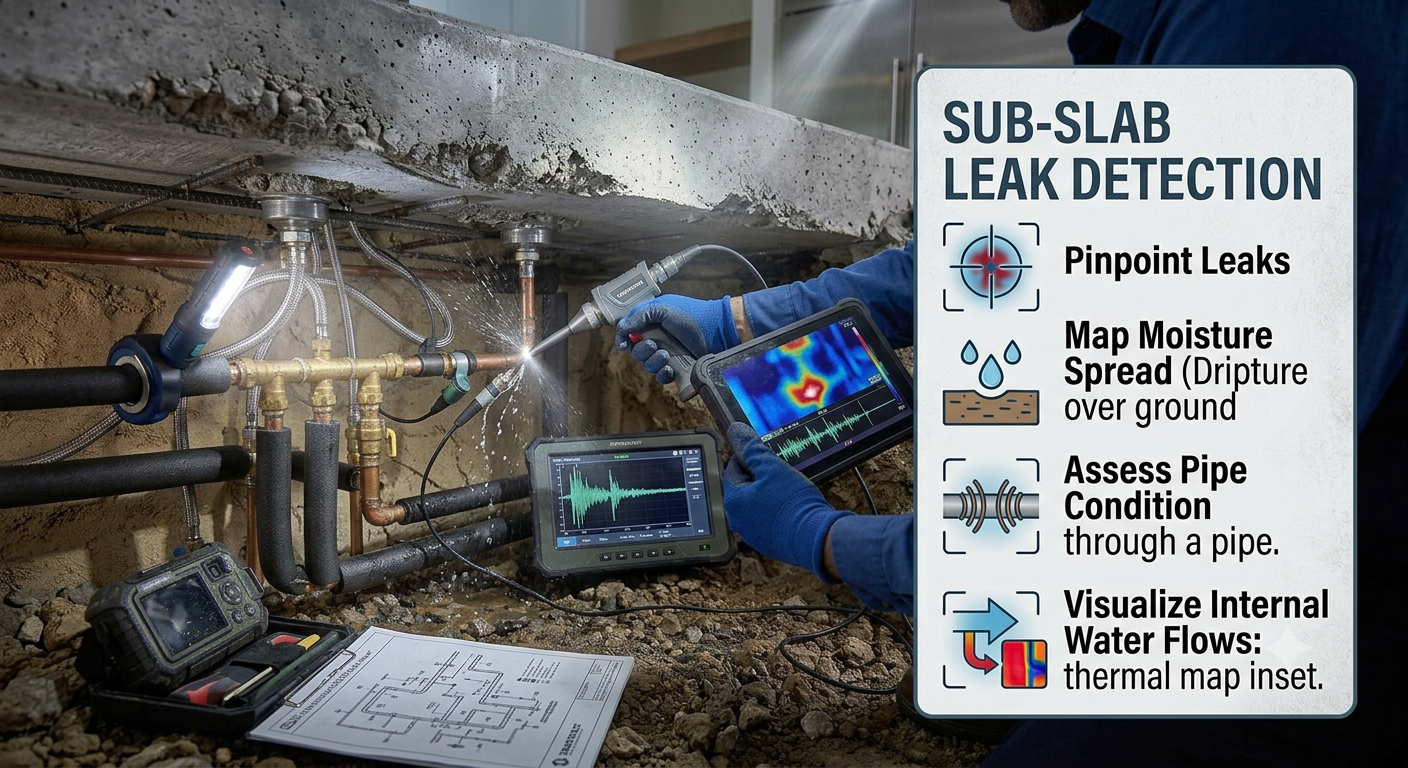
A water leak under a concrete floor can be difficult to identify because the damaged pipe is hidden beneath the slab. You may notice a sudden increase in your water bill, damp flooring, a warm spot on the floor, or the sound of running water even when every faucet is turned off.
The good news is that you do not always need to break open the concrete to find the source. Professional leak detection methods can help narrow down the location before any repair work begins.
In this guide, Water Shield Leak Detection explains the warning signs of a hidden slab leak, what you can safely check yourself, and how professionals locate leaks beneath concrete floors.
What Is a Water Leak Under a Concrete Floor?
A water leak under a concrete floor, commonly called a slab leak, occurs when a water pipe beneath or within a concrete foundation develops a leak. These pipes may carry hot or cold water to different parts of your home or building.
Because the pipes are concealed, the water may travel through soil, concrete, or flooring materials before becoming visible. As a result, the damp spot on your floor may not be directly above the damaged pipe.
Finding the actual source is important because unnecessary concrete cutting can increase repair costs and cause additional disruption.
7 Signs of a Water Leak Under Your Concrete Floor
1. An Unexpected Increase in Your Water Bill
If your water bill rises significantly without a change in household usage, a hidden plumbing leak could be one possible explanation. A continuously leaking supply line may waste water even when no fixtures are being used.
Check for other potential causes, including running toilets, leaking faucets, irrigation systems, and faulty appliances.
2. A Warm or Hot Spot on the Floor
A localized warm area on a tile, concrete, or other hard floor may indicate a leak from a hot-water pipe beneath the slab.
However, underfloor heating, sunlight, and nearby appliances can also cause temperature changes. A warm spot is a useful clue, not proof of a leak.
3. Damp Flooring or Discolored Tiles
Persistent dampness, dark patches, loose tiles, separating grout, or moisture near the edge of a floor may indicate a concealed water problem.
Water can travel beneath the flooring before reaching the surface, so the visible damage may be some distance from the actual leak.
4. The Sound of Running Water
If you hear a faint hissing or rushing sound near the floor when taps and water-using appliances are off, a leaking pressurized water line may be responsible.
Background noise from heating and cooling equipment or other plumbing fixtures can make the source difficult to identify without specialized equipment.
5. Cracks or Changes in Flooring
New cracks, lifting tiles, buckling flooring, or changes in the floor finish can sometimes accompany prolonged moisture exposure. However, these symptoms can also result from settlement, temperature changes, or installation problems.
Investigate persistent or unexplained changes rather than assuming every crack indicates a slab leak.
6. Reduced Water Pressure
A leaking supply pipe may contribute to reduced water pressure, particularly when the leak is substantial. Nevertheless, pressure problems can also originate from a faulty pressure regulator, a partially closed valve, or other plumbing issues.
7. Persistent Musty Odors
A musty smell around a ground-floor room may indicate trapped moisture beneath flooring or inside surrounding materials. If the odor persists without an obvious source, investigate the moisture rather than covering it with air fresheners.
How to Check for a Possible Leak Yourself
Before arranging professional detection, you can perform a few basic checks.
Step 1: Turn Off Water-Using Fixtures
Make sure faucets, showers, washing machines, dishwashers, and other water-using appliances are not running. Check irrigation systems and toilets as well.
Step 2: Check Your Water Meter
If you have an accessible water meter, note its reading or leak indicator after water use has stopped. Wait for a suitable period without using water and check it again.
If the meter continues registering water use, there may be an active leak or another source of water consumption.
Follow your water provider’s instructions for reading the meter. A moving meter does not identify the leak’s location, and a stationary meter does not rule out every intermittent leak or drain-line problem.
Step 3: Inspect the Surrounding Area
Look for damp flooring, discoloration, loose tiles, moisture near walls, or unusual temperature changes. Note when the symptoms occur and whether they change after water use.
Step 4: Check Accessible Plumbing
Inspect visible pipes, water heater connections, cabinets beneath sinks, toilets, and accessible plumbing connections for signs of leakage.
Avoid opening concrete or dismantling plumbing to investigate a suspected underground leak. If the signs point to a concealed pipe, professional testing is the safer next step.
How Professionals Find a Water Leak Under Concrete
Professional leak detection combines several diagnostic methods. The appropriate approach depends on the pipe material, the suspected leak location, the building layout, and whether the affected line carries pressurized water.
1. Acoustic Leak Detection
Acoustic equipment detects sounds and vibrations associated with water escaping from a pressurized pipe. A technician can compare readings at different locations to narrow down the likely leak area.
This method can help locate hidden leaks without exploratory concrete cutting, although background noise and pipe conditions can affect the results.
2. Thermal Imaging
Thermal imaging cameras detect temperature differences across a floor’s surface. A leaking hot-water pipe may create a temperature pattern that helps identify the affected area.
Thermal imaging does not directly see through concrete, and it may be less useful when there is little temperature difference or when other heat sources interfere.
3. Pressure Testing
Pressure testing helps determine whether a plumbing line or isolated section is losing pressure. It can help confirm a suspected leak and narrow down the affected section of the plumbing system.
Testing should be performed using suitable procedures and pressure limits for the specific plumbing system.
4. Electronic Pipe Locating
Electronic locating equipment can help trace accessible or detectable pipe routes beneath floors and other concealed areas. Knowing the probable pipe path helps a technician interpret other test results and plan a more targeted investigation.
5. Tracer Gas Detection
In suitable cases, a specialist may use a tracer gas method to investigate a suspected leak. A compatible gas is introduced into an appropriately prepared pipe system, and specialized equipment detects where it escapes.
This technique may be useful when other methods are inconclusive. It is not suitable for every pipe system or leak type.
The key point: No single method is guaranteed to locate every leak. Combining appropriate tests can help narrow the suspected location and reduce unnecessary damage.
Does Finding a Leak Mean Breaking the Concrete?
Not necessarily. The goal of leak detection is to identify the likely source before deciding how to access and repair the pipe.
Once the leak has been located, a qualified plumbing professional can discuss the available repair options. Depending on the pipe layout and condition, these may include targeted access through the slab, repairing an accessible section, or rerouting the affected line.
The best option depends on the actual plumbing system, the location of the damage, and the condition of the surrounding structure. Avoid cutting concrete based only on a damp patch or a thermal image.
When Should You Call a Leak Detection Professional?
Consider arranging a professional inspection when:
-
Your water bill rises unexpectedly and the cause remains unclear.
-
Your water meter indicates continued usage when all fixtures are off.
-
You notice persistent dampness or a warm area on a concrete floor.
-
You hear running water when the plumbing is not in use.
-
Flooring damage continues without an obvious explanation.
-
Basic checks suggest a concealed pipe leak.
If water is spreading rapidly or approaching electrical equipment, stay clear of the affected area and shut off the water supply if it is safe to do so. Seek urgent professional assistance.
Water Leak Detection in the San Francisco Bay Area
If you suspect a water leak beneath a concrete floor, Water Shield Leak Detection can help investigate the problem and determine the appropriate next steps.
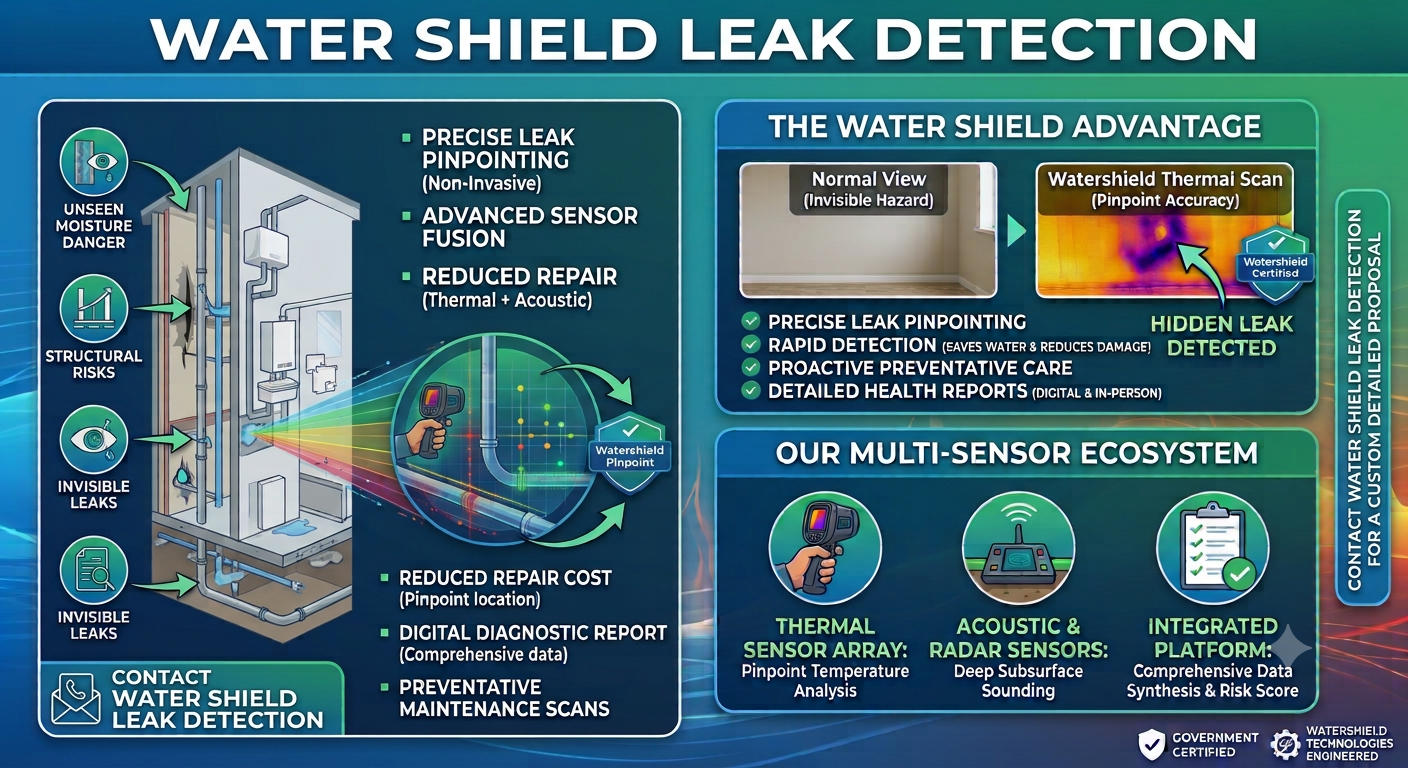
We provide leak detection services for residential and commercial properties, including suspected slab leaks, hidden plumbing leaks, and underground water line leaks. Depending on the situation, our team may use acoustic listening equipment, thermal imaging, pressure testing, electronic pipe locating, or other suitable methods.
We serve customers across the San Francisco Bay Area, including Hayward and surrounding communities. Contact us to discuss your symptoms and confirm service availability at your property.
Need help locating a hidden water leak?
Call Water Shield Leak Detection at (510) 930-8063 or visit our contact page to discuss your leak detection needs.
Frequently Asked Questions
Can I find a water leak under concrete without breaking the floor?
In many cases, professional detection methods can narrow down the suspected leak location before any concrete is opened. Acoustic testing, thermal imaging, pressure testing, and other methods may be used depending on the circumstances.
Does a warm concrete floor always mean a slab leak?
No. A warm spot may indicate a hot-water pipe leak, but underfloor heating, sunlight, and appliances can cause similar temperature changes. Further testing is needed to determine the cause.
Can a water meter confirm a leak under the slab?
A moving meter when all water use has stopped can indicate continued water consumption, but it cannot establish that the leak is beneath the slab. Additional testing is needed to identify the affected plumbing section and locate the source.
How long does slab leak detection take?
The time required depends on the property’s layout, pipe accessibility, leak characteristics, and the testing methods needed. A technician can provide a more useful estimate after understanding the symptoms and plumbing system.
Is a slab leak an emergency?
A slab leak can waste water and damage flooring or surrounding materials. A substantial or rapidly worsening leak should be addressed urgently. Even a suspected slow leak should be investigated promptly to prevent further damage.
Who should I contact for a water leak under a concrete floor?
Contact a qualified leak detection specialist or plumber experienced in concealed and slab leak investigations. Ask how the suspected source will be verified before any concrete cutting or major repair work begins.
Post Views: 16

Leave a Reply