


Are you searching for a plumber who uses thermal imaging to find hidden water leaks near you? If you have damp walls, unexplained water stains, a warm spot on your floor, or an unusually high water bill, a concealed plumbing leak could be the cause.
Finding the source of a hidden leak can be challenging because the damaged pipe may be behind a wall, beneath a concrete slab, or under flooring. Opening walls or breaking concrete before locating the problem can lead to unnecessary property damage.
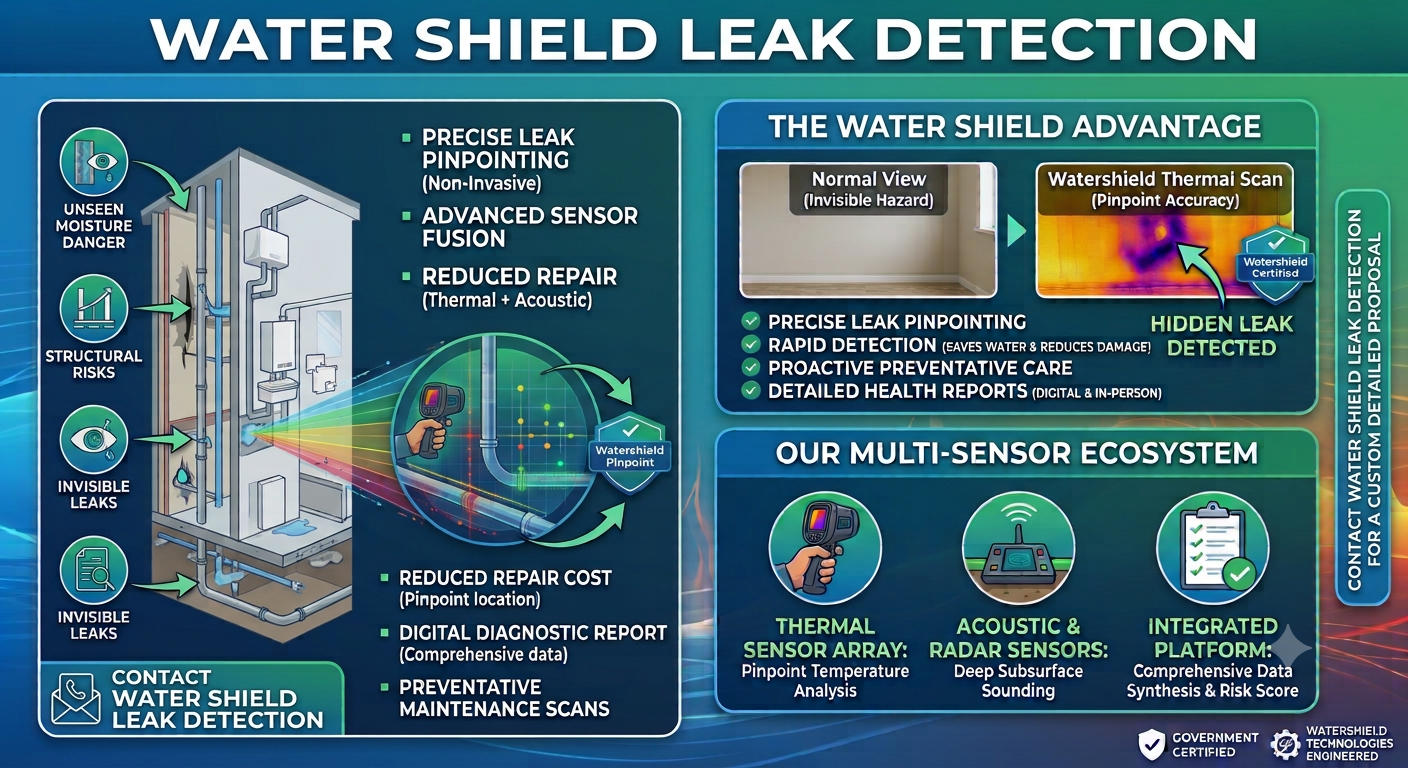
Thermal imaging can help identify temperature patterns associated with hidden moisture or leaking hot-water pipes. When combined with other diagnostic methods, it can help a leak detection specialist narrow down the suspected problem area before repairs begin.
If you live in the San Francisco Bay Area, Water Shield Leak Detection can help investigate suspected hidden water leaks and determine the appropriate next steps.
What Is Thermal Imaging for Leak Detection?
Thermal imaging uses an infrared camera to measure surface temperatures and display them as a visual image. Differences in temperature can help a trained technician identify areas that may be affected by moisture or concealed hot-water pipes.
For example, water escaping from a hot-water pipe may create a temperature pattern on a nearby floor or wall. Moisture can also change how building materials retain heat or cool through evaporation, producing patterns that warrant further investigation.
It is important to understand that a thermal camera does not see through walls or directly detect water. It measures surface temperature differences. A technician must interpret the results and, when necessary, confirm suspected leaks using additional testing.
7 Signs You May Need a Plumber With Thermal Imaging
1. Unexplained Water Stains on Walls or Ceilings
Brown marks, peeling paint, bubbling drywall, or damp patches may indicate a concealed plumbing leak. The visible stain may be some distance from the source because water can travel through building materials before appearing on the surface.
Thermal imaging may help identify temperature patterns around the affected area and guide further investigation.
2. A Warm Spot on Your Floor
A localized warm area on a tile or concrete floor could indicate a hot-water pipe beneath the surface. Thermal imaging may help trace the pipe route and identify an unusual temperature pattern.
However, underfloor heating, sunlight, and nearby appliances can produce similar readings, so further testing may be needed.
3. A Sudden Increase in Your Water Bill
If your water bill increases without a corresponding change in usage, a hidden plumbing leak is one possible explanation.
Check toilets, faucets, irrigation systems, and appliances first. If the cause remains unclear, a leak detection professional can help investigate whether a concealed supply line is losing water.
4. Persistent Dampness or Musty Odors
Damp flooring, recurring moisture, or a persistent musty smell may indicate a hidden moisture problem. A thermal scan can help identify unusual temperature patterns, while moisture measurements can help assess whether building materials are wet.
5. The Sound of Running Water
If you hear water flowing when all taps and water-using appliances are turned off, a leaking pressurized pipe may be responsible.
Thermal imaging may be useful in some cases, but acoustic leak detection and pressure testing may be more appropriate for identifying the location of a pressurized pipe leak.
6. Loose Tiles or Damaged Flooring
Moisture beneath tiles or other flooring materials can sometimes contribute to lifting, discoloration, or deterioration. These symptoms can also have other causes, so a professional assessment can help distinguish a plumbing leak from an installation or structural issue.
7. Repeated Leaks After Previous Repairs
If the same area becomes damp again after a repair, the original source may not have been fully identified, or another problem may exist.
A more comprehensive investigation using suitable diagnostic methods can help determine whether the leak is coming from the same pipe or a different source.
How Does a Plumber Use Thermal Imaging to Find a Leak?
A professional inspection typically involves more than pointing a thermal camera at a wall. The technician needs to understand the symptoms, assess the building, and interpret the temperature patterns in context.
Step 1: Discuss the Symptoms
The technician asks where you noticed moisture, when it appeared, whether the water bill changed, and whether the problem occurs after using particular plumbing fixtures.
This information helps determine which plumbing lines and areas should be investigated first.
Step 2: Scan the Suspected Area
The technician uses a thermal camera to examine the floor, walls, ceiling, or other accessible surfaces. The camera displays temperature differences that may indicate a concealed hot-water pipe or an area affected by moisture.
Step 3: Check Suspicious Areas
Unusual thermal patterns can have several causes. Depending on the situation, the technician may use a moisture meter or other suitable diagnostic equipment to investigate further.
Step 4: Confirm the Suspected Leak
Pressure testing, acoustic listening equipment, or electronic pipe locating may help narrow down the source, depending on the plumbing system and the type of leak.
The goal is to establish a sufficiently reliable location before recommending access or repairs.
Step 5: Explain the Findings and Next Steps
Once the investigation is complete, the technician can explain the likely source, what additional confirmation may be needed, and the available repair options.
Ask whether the inspection includes marked suspected leak locations, diagnostic findings, and recommendations for the next stage of work.
Can Thermal Imaging Find Leaks Behind Walls and Under Concrete?
Thermal imaging can be useful for investigating certain hidden plumbing leaks, but its effectiveness depends on the conditions.
Behind walls: Temperature patterns may help identify moisture associated with a concealed leak, especially when the moisture changes the surface temperature.
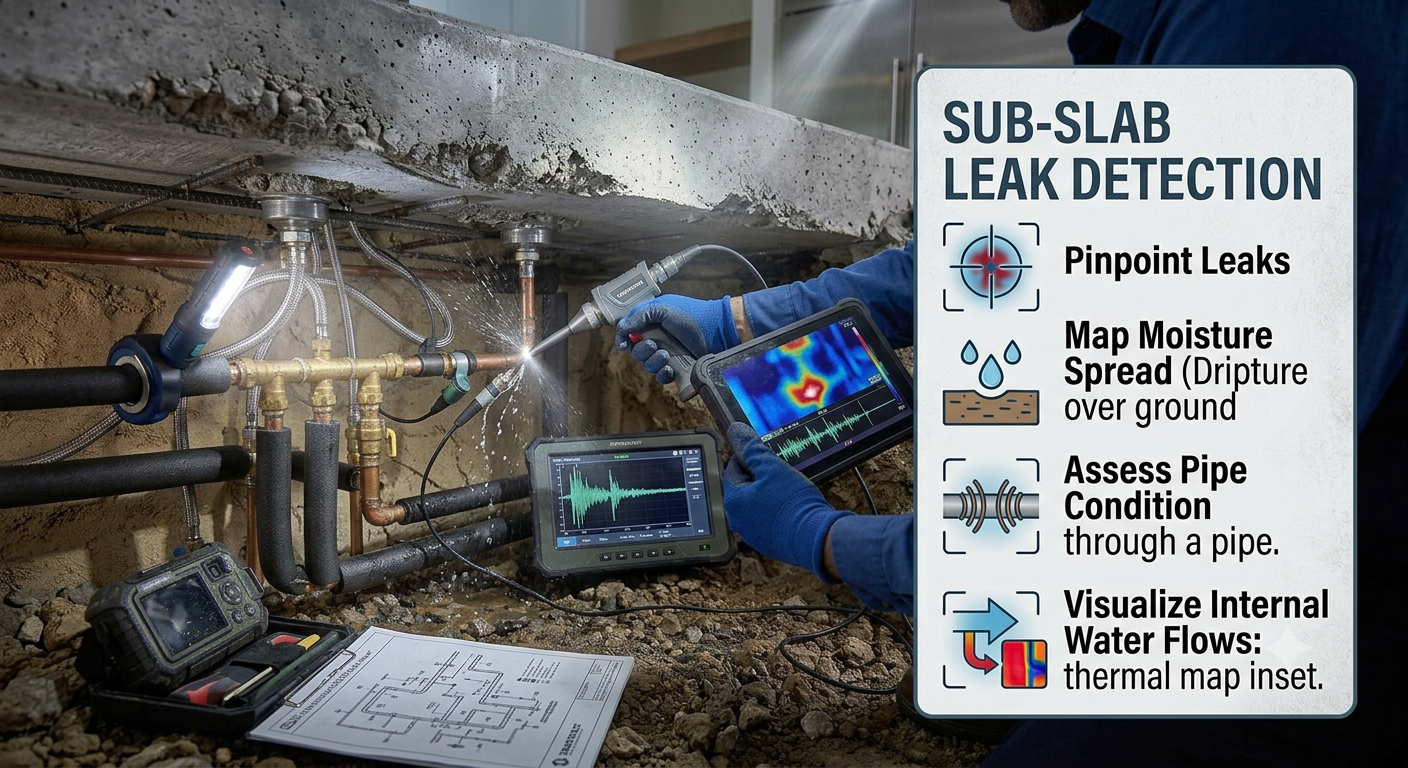
Under concrete floors: Thermal imaging may help trace hot-water pipes or identify temperature anomalies associated with moisture. However, deep pipes, thick concrete, limited temperature differences, and other environmental factors can make detection difficult.
Cold-water pipes: These can sometimes be investigated using thermal imaging, but the results depend on the temperature difference between the pipe, water, and surrounding materials.
For leaks that do not produce a useful thermal pattern, acoustic testing, pressure testing, or tracer gas detection may be more appropriate.
No single method guarantees detection of every hidden leak. The best approach depends on the type of plumbing system and the symptoms.
Thermal Imaging vs. Traditional Leak Detection
| Feature | Thermal imaging | Other diagnostic methods |
|---|---|---|
| Detects surface temperature patterns | Yes | Not necessarily |
| Can help investigate concealed hot-water pipes | Yes | Acoustic and pipe-locating tools may also help |
| Can confirm every water leak on its own | No | Depends on the method |
| Can help reduce exploratory damage | Yes, in suitable cases | Also possible with targeted testing |
| Useful for pressurized underground leaks | Sometimes | Acoustic or tracer gas methods may be more suitable |
A skilled specialist chooses the method based on the problem rather than relying on one piece of equipment for every inspection.
How to Choose a Plumber Who Uses Thermal Imaging Near You
Before booking an appointment, ask these questions to make sure the provider is equipped to investigate your particular problem.
1. Do You Actually Use Thermal Imaging Equipment?
Confirm that thermal imaging is part of the service offered and ask whether it is appropriate for your suspected leak.
2. What Other Leak Detection Methods Do You Use?
A provider should be able to explain when thermal imaging is useful and when acoustic listening, pressure testing, moisture measurements, or other methods may be needed.
3. Will You Confirm the Findings Before Cutting the Floor?
Ask how the technician distinguishes a suspected thermal anomaly from a confirmed plumbing issue and how the likely leak location will be narrowed down.
4. Do You Provide a Clear Explanation of the Results?
Ask whether the inspection includes an explanation of the findings, the suspected location, and the recommended next steps.
5. Do You Serve My Location?
Confirm that the company serves your address and can investigate the type of leak you suspect. A provider’s proximity alone does not guarantee that it offers the required diagnostic service.
6. What Does the Inspection Cost?
Request an estimate before the visit. Costs may depend on the property size, accessibility, type of plumbing system, number of suspected leak locations, and whether additional testing is required.
Water Shield Leak Detection: Serving the San Francisco Bay Area
If you are looking for professional help with a suspected hidden water leak, Water Shield Leak Detection serves residential and commercial customers across the San Francisco Bay Area, including Hayward and surrounding communities.
Our leak detection work may involve acoustic listening equipment, thermal imaging, pressure testing, electronic pipe locating, tracer gas detection, or other suitable diagnostic methods, depending on the circumstances.
We investigate suspected water leaks, slab leaks, underground water line leaks, and other concealed plumbing problems. The appropriate method depends on the symptoms and the plumbing system at your property.
Contact us to describe the problem and confirm service availability in your area.
Call Water Shield Leak Detection: (510) 930-8063
You can also visit our contact page to discuss your leak detection needs.
Frequently Asked Questions
Can a plumber use thermal imaging to find a water leak?
Yes. Thermal imaging can help identify temperature patterns associated with certain hidden plumbing leaks. The results should be interpreted by a qualified professional and confirmed with additional testing when necessary.
Does thermal imaging detect water inside walls?
No. A thermal camera measures surface temperatures rather than seeing directly through walls. Moisture or a leaking pipe may alter the surface temperature, creating a pattern that can help guide the investigation.
Can thermal imaging locate a slab leak?
It can help investigate some suspected slab leaks, particularly when a hot-water pipe creates a detectable temperature pattern. Other methods may be necessary when the leak does not produce a clear thermal signature.
Is thermal imaging leak detection non-invasive?
The thermal scan itself is non-invasive because it does not require cutting into a wall or floor. However, additional testing or repair access may still be required to confirm and fix the leak.
Is thermal imaging better than acoustic leak detection?
Neither method is best for every situation. Thermal imaging identifies surface temperature patterns, while acoustic equipment listens for sounds associated with escaping water. A specialist may use either method or combine them depending on the pipe and leak conditions.
How do I find a thermal imaging plumber near me?
Search for local plumbing or leak detection professionals who specifically offer thermal imaging. Confirm their service area, ask what other diagnostic methods they use, and request an explanation of how they will verify the suspected leak before recommending repairs.
When should I seek professional leak detection?
Arrange an inspection if you notice persistent dampness, unexplained water usage, recurring stains, warm flooring, or other signs of a concealed leak. If water is spreading rapidly or creating an electrical hazard, stay clear of the affected area and seek urgent assistance.
Post Views: 12

Leave a Reply