Your irrigation system can use a significant amount of water during normal operation. When an underground pipe, sprinkler line, valve, or connection develops a leak, however, water can escape without providing any benefit to your lawn or landscaping.
The result can be water waste, higher water usage, and an unexpectedly high water bill.
The difficult part is that irrigation leaks are often hidden underground. You may not see a broken pipe or obvious puddle. Instead, you might first notice a higher-than-normal water bill, unusually green grass, soggy soil, or inconsistent sprinkler performance.
If your water bill has increased without an obvious reason, your irrigation system is one of the areas worth checking.
Suspect an irrigation leak? Call Water Shield Leak Detection at 510-930-8063.
Can an Irrigation Leak Really Increase Your Water Bill?
Yes.
Your water meter measures the amount of water passing through the system. If an irrigation pipe is leaking, that water can still be recorded as water consumption even though it isn’t reaching the plants or lawn as intended.
A leak may occur:
Underground beneath your lawn
Beneath landscaping
Around an irrigation valve
Along a sprinkler line
At a pipe connection
Near a sprinkler head
Beneath hardscape
Water Shield’s current Bay Area service information identifies leaking irrigation systems as a possible cause of high water bills and water waste.
The longer a leak continues, the more opportunity there is for unnecessary water consumption.
7 Ways an Irrigation Leak Can Increase Your Water Bill
1. Water Escapes Every Time the System Runs
An irrigation system operates on a schedule.
If a buried sprinkler line has a leak, water can escape whenever that irrigation zone turns on.
Instead of all the water being distributed through the intended sprinkler heads, some of it may disappear into the surrounding soil.
For example, your controller may run a zone for 20 minutes exactly as programmed, but part of the water may be escaping through a damaged underground pipe during that entire cycle.
Your system may appear to be working normally while still wasting water.
2. A Small Leak Can Continue for Weeks
One of the problems with underground irrigation leaks is that they can be easy to overlook.
A small leak may not produce a large puddle. Instead, the surrounding soil can absorb the water.
You might simply notice:
A slightly greener section of grass
Damp soil
A small area that stays soft
Gradually increasing water usage
If the leak remains undetected, the additional water consumption can continue every time the irrigation system operates.
Water Shield’s existing guidance notes that hidden leaks can go unnoticed while contributing to higher water bills.
3. A Damaged Sprinkler Line Can Waste Water Underground
The pipes carrying water between irrigation components are often buried.
When one of these lines cracks or develops a damaged connection, water can escape underground rather than reaching the sprinkler heads.
Because you may not immediately see the leak, the system could continue operating according to its normal schedule.
This is why an irrigation leak can sometimes show up first as a water bill problem rather than an obvious plumbing problem.
4. Leaking Valves Can Waste Water
Irrigation valves control water flow to different sections of the system.
A faulty or damaged valve may allow water to escape or prevent a zone from shutting off properly.
Signs can include:
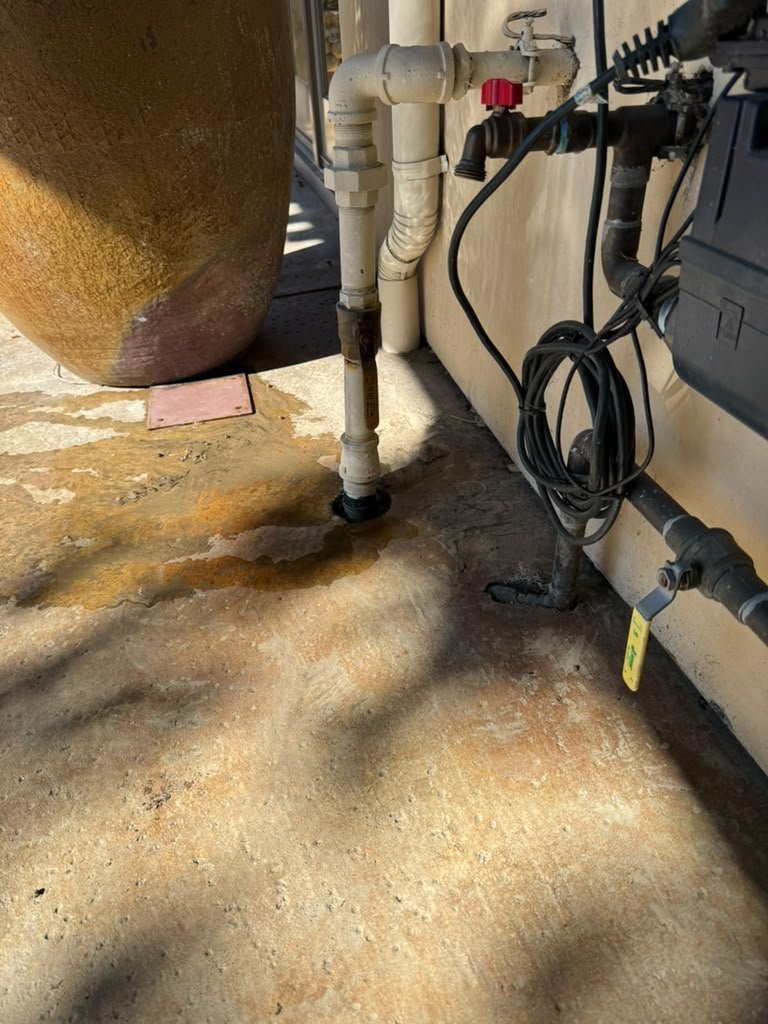
Water around the valve box
Persistent moisture
A zone that doesn’t shut off normally
Unexpected water usage
Water continuing to flow after irrigation should have stopped
If you notice water around a valve box, don’t automatically assume the underground pipe is the problem. The valve or connection itself may need inspection.
5. A Hidden Leak Can Make the Irrigation System Work Less Efficiently
An irrigation system is designed to distribute water in a controlled way.
When part of that water escapes through a leak, the intended irrigation coverage may be affected.
You might see:
Weak sprinkler spray
Reduced spray distance
Uneven lawn coverage
One zone performing differently
Dry areas alongside unusually wet areas
Homeowners may respond by increasing watering time or frequency to compensate for poor coverage.
If the underlying problem is a leak, increasing irrigation can potentially result in even more water waste.
6. Water Can Pool or Soak Into Areas That Don’t Need Irrigation
An underground leak doesn’t necessarily send water straight to the surface.
Water can move through surrounding soil before becoming visible.
Eventually, you might notice:
Persistent wet soil
Muddy areas
Puddles
Soil erosion
Depressions in the landscape
Unusually green vegetation
The location where water appears may not be the exact location of the damaged pipe.
This is important when trying to determine where the water is being lost.
7. You May Not Notice the Leak Until the Water Bill Arrives
Some irrigation leaks produce obvious symptoms.
Others don’t.
Your lawn may look relatively normal, the sprinkler heads may appear to operate correctly, and there may be no large puddle.
The first indication may simply be:
“Why is my water bill suddenly higher?”
If your household water usage has remained relatively consistent but your bill has increased, consider whether your irrigation schedule or system condition has changed.
An unusually high water bill can have many causes, including household usage changes, running toilets, plumbing leaks, and irrigation leaks. Water Shield’s current content specifically identifies leaking irrigation systems among possible causes of unexpectedly high water bills.
5 Signs Your Irrigation System May Be Causing a High Water Bill
Watch for these warning signs:
1. Your water bill suddenly increases
Especially when your household usage hasn’t changed.
2. Your lawn has unusually green patches
Additional underground moisture can affect vegetation.
3. The soil stays wet
Persistent wetness can indicate water escaping below the surface.
4. Your sprinklers have weak or uneven pressure
A damaged line can affect water delivery to a zone.
5. Water appears when it shouldn’t
Water around valve boxes, landscaping, or other areas after the irrigation cycle has ended deserves investigation.
The more of these signs you notice together, the more important it becomes to investigate the irrigation system.
How to Tell If Your Irrigation System Is Causing the High Water Bill
Before assuming the irrigation system is responsible, consider your overall water usage.
Check Your Irrigation Schedule
Has the watering schedule recently changed?
Increasing the number of watering days or extending run times can naturally increase consumption.
Compare Previous Water Bills
Look at several months of water usage rather than focusing on a single bill.
Look for a sudden or gradual change.
Check Your Sprinkler System
Inspect visible sprinkler heads, valve boxes, and landscaped areas for obvious problems.
Monitor Your Water Meter
When appropriate, turn off water-using fixtures and appliances and monitor the meter.
If the meter continues moving, there may be water being used somewhere on the property.
However, this test alone cannot determine whether the source is an irrigation leak, plumbing leak, or another water-consuming system.
Observe Individual Irrigation Zones
Run each zone separately and watch for:
Unexpected puddles
Wet soil
Weak pressure
Water around valve boxes
Unusual sprinkler behavior
Why an Underground Irrigation Leak Can Be Difficult to Find
Finding a visible sprinkler head problem can be relatively straightforward.
Finding a buried irrigation pipe leak is different.
The damaged section may be underneath:
Grass
Soil
Mulch
Flower beds
Trees
Driveways
Walkways
Other landscaping
Water can also travel through soil before reaching the surface.
That means the wet spot you see may not be directly above the damaged pipe.
Simply digging around the wet area could therefore result in unnecessary excavation.
What Causes Irrigation Leaks?
Several factors can contribute to irrigation system leaks.
Aging Pipes
Irrigation components can deteriorate over time.
Damaged Connections
Joints and fittings can become damaged or loosen.
Tree Root Growth
Roots can affect underground irrigation components and surrounding soil.
Ground Movement
Soil movement or settling can place stress on buried pipes.
Landscaping Work
Digging, planting, construction, or other outdoor work can accidentally damage irrigation lines.
Pressure Problems
Excessive water pressure can put additional stress on irrigation components.
The exact cause depends on the condition, age, installation, and design of the irrigation system.
Can Irrigation Leak Detection Save Money?
The value of leak detection isn’t simply about finding a wet spot.
Accurately identifying the source can help determine what actually needs to be repaired.
Without locating the problem, homeowners may be tempted to:
Replace sprinkler heads unnecessarily
Dig multiple areas
Increase irrigation times
Replace components that aren’t damaged
Continue operating a leaking system
Professional detection can help narrow down the suspected location so the appropriate repair can be considered.
When Should You Call an Irrigation Leak Detection Professional?
Consider professional inspection if:
Your water bill has increased unexpectedly
Your irrigation schedule hasn’t changed
Your lawn has persistent wet spots
One section is unusually green
You notice water pooling
One irrigation zone has weak pressure
Water appears around a valve box
Your system isn’t shutting off normally
You’ve inspected visible sprinkler heads but can’t find the problem
You suspect an underground irrigation pipe is leaking
Don’t wait for a large puddle to appear before investigating.
Irrigation Leak Detection in the Bay Area
Water Shield Leak Detection provides irrigation leak detection for residential and commercial properties throughout the San Francisco Bay Area.
Its current service information specifically describes locating broken sprinkler lines, leaking irrigation valves, and underground irrigation leaks that can contribute to water waste and high water bills.
If your water bill has increased unexpectedly and your irrigation system is a possible source, professional leak detection can help determine whether water is escaping underground.
Suspect Your Irrigation System Is Leaking?
Call Water Shield Leak Detection at 510-930-8063 to discuss professional irrigation leak detection in the Bay Area.
Frequently Asked Questions
Can an irrigation leak cause a high water bill?
Yes. Water escaping from a damaged sprinkler line, valve, fitting, or other irrigation component can increase water consumption and contribute to a higher bill.
How much water can an irrigation leak waste?
The amount varies significantly depending on the size and location of the leak, water pressure, and how frequently the irrigation system operates. There isn’t one reliable number that applies to every leak.
Why did my water bill suddenly increase?
Possible causes include increased household consumption, irrigation changes, running toilets, plumbing leaks, underground water line leaks, and irrigation leaks. An inspection may be needed to determine the actual cause.
Can an underground irrigation leak happen without a puddle?
Yes. Water can be absorbed into surrounding soil or travel underground, meaning a leak may produce no obvious surface puddle.
How can I tell if my sprinkler system is leaking?
Look for unexplained increases in water usage, wet areas, unusually green grass, weak sprinkler pressure, water around valve boxes, or water appearing when the system shouldn’t be operating.
Can I find an irrigation leak myself?
You can inspect visible sprinkler heads, valve boxes, landscaping, and individual irrigation zones. However, a buried pipe leak may be difficult to locate without specialized equipment.
Can an irrigation leak be detected without digging?
Professional leak detection and pipe-locating methods can help narrow down the suspected location before excavation. The exact method depends on the irrigation system and suspected leak.
Don’t Let a Hidden Irrigation Leak Inflate Your Water Bill
An unexpected water bill can sometimes be the first clue that your irrigation system is losing water underground.
If you’ve noticed higher water usage, wet areas, unusually green grass, weak sprinkler pressure, or unexplained water, investigate the system before the problem continues.
Call Water Shield Leak Detection at 510-930-8063 for professional irrigation leak detection in the Bay Area.



Leave a Reply