


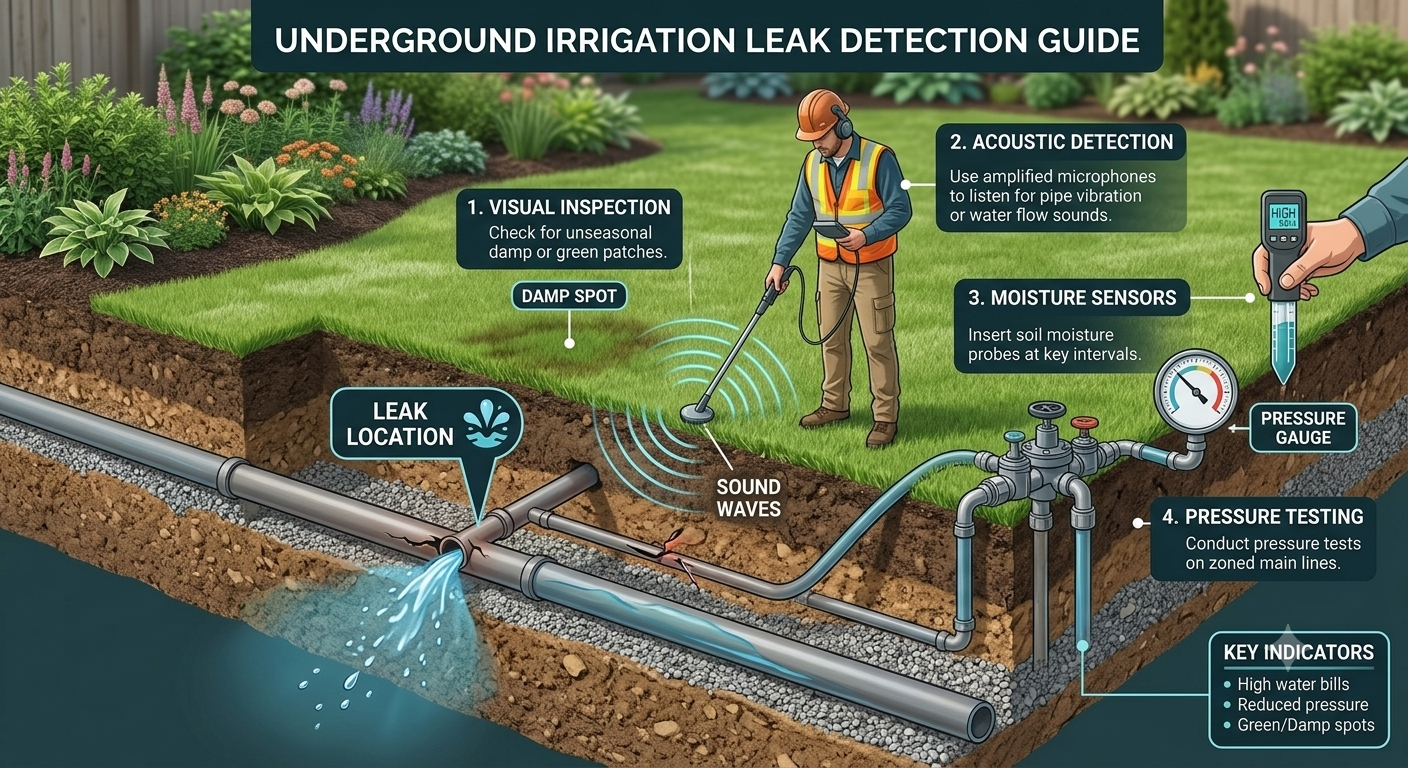
How to Detect an Underground Irrigation Leak

An underground irrigation leak can waste a significant amount of water without being immediately visible. A broken sprinkler line, damaged underground pipe, leaking valve, or failed connection can allow water to escape beneath your lawn or landscaping every time the irrigation system operates.
Unlike a leaking sprinkler head, an underground irrigation leak can be difficult to identify because the damaged pipe may be buried beneath grass, soil, mulch, landscaping, or hardscape.
Common warning signs include unusually wet areas, unexplained puddles, unusually green patches of grass, declining water pressure, erosion, soggy soil, and unexpectedly high water usage.
Water Shield Leak Detection provides professional irrigation leak detection for residential and commercial properties and specializes in locating broken sprinkler lines, leaking irrigation valves, and underground irrigation leaks.
If you suspect your irrigation system is leaking, call Water Shield Leak Detection at 510-930-8063 for professional help locating the source.
What Is an Underground Irrigation Leak?
An underground irrigation leak occurs when water escapes from a buried irrigation pipe, sprinkler line, valve, fitting, or connection.
Irrigation systems typically contain a network of underground pipes that carry water to sprinkler heads and other watering components. Because much of the system is hidden below ground, a damaged section may continue leaking without an obvious visible break.
An irrigation leak can occur:
-
Beneath a lawn
-
Under landscaping
-
Near sprinkler heads
-
Around irrigation valves
-
Along underground pipe connections
-
Beneath walkways or hardscape
-
Near trees or large plants
The location where water appears on the surface is not always the exact location of the damaged pipe.
10 Signs of an Underground Irrigation Leak
1. Wet Spots in Your Yard
One of the most noticeable signs is an area of soil that remains unusually wet.
If a particular section of your lawn or landscaping stays damp even when the irrigation system has not recently operated, water may be escaping underground.
Look for:
-
Soggy soil
-
Muddy areas
-
Persistent puddles
-
Wet patches surrounded by dry soil
However, drainage problems and natural groundwater can also create wet areas, so the presence of moisture alone does not confirm an irrigation leak.
2. Unusually Green Grass
A patch of grass that is significantly greener or healthier than the surrounding lawn can sometimes indicate an underground irrigation leak.
Water escaping beneath the surface can provide additional moisture to the soil.
For example, you might notice a narrow or unusually green strip across an otherwise consistent lawn.
This can be an important clue, particularly when the green area follows the approximate route of an irrigation line.
3. Unexplained Increase in Water Usage
A damaged irrigation system can increase water consumption.
If your water usage suddenly increases without a corresponding change in your watering schedule, check the irrigation system.
A leak may be especially noticeable when:
-
Your irrigation schedule hasn’t changed
-
Household water usage remains consistent
-
The water bill increases unexpectedly
-
The increase occurs during irrigation periods
Monitoring your water usage can help identify changes before they become larger problems.
4. Puddles Form When the Irrigation System Runs
Watch your landscaping while the irrigation system is operating.
If water begins pooling in an area that normally stays dry, there may be a problem with an underground pipe, connection, sprinkler component, or valve.
A properly functioning irrigation system should distribute water where it is intended to go rather than producing unexplained pools of water.
5. Soil Erosion or Depressions
An underground leak can move soil as water escapes from a damaged pipe.
Over time, you may notice:
-
Small depressions
-
Soil erosion
-
Muddy areas
-
Exposed roots
-
Changes in the shape of the landscape
These symptoms can have other causes, but unexplained erosion near an irrigation line deserves investigation.
6. A Drop in Irrigation Pressure
A significant leak can affect the pressure available to sprinkler heads.
You may notice that:
-
Sprinklers don’t spray as far as they normally do
-
Some sprinkler heads have weaker flow
-
Certain zones perform differently
-
The system struggles to maintain normal pressure
Pressure changes can also result from clogged sprinkler heads, valve problems, or other irrigation issues, so additional testing may be necessary.
7. One Irrigation Zone Performs Differently
If one zone suddenly behaves differently from the others, pay attention.
For example, one section may have:
-
Weak sprinkler coverage
-
Reduced water pressure
-
Standing water
-
Unusually wet soil
-
Sprinklers that don’t operate normally
A problem isolated to one zone can provide a useful clue about where to investigate.
8. Water Appears Near a Valve Box
Irrigation valves control water flow to different parts of the irrigation system.
If you notice persistent water around a valve box after the irrigation system has stopped running, inspect the area.
A leaking valve, fitting, or nearby underground pipe could be responsible.
9. Sprinklers Are Not Performing Normally
A sprinkler system that suddenly behaves differently may have an underlying leak.
Watch for:
-
Reduced spray distance
-
Weak water flow
-
Uneven coverage
-
Sprinklers that don’t pop up properly
-
Water escaping around sprinkler heads
Before assuming the underground pipe is damaged, check the sprinkler heads and visible components for obvious problems.
10. Your Irrigation System Runs Normally but Water Is Still Being Lost
Sometimes the most important clue is that the irrigation system appears to operate normally.
You may not see a broken pipe or obvious puddle, yet your water consumption continues to increase.
A hidden underground leak can remain difficult to identify because the escaping water may be absorbed into the surrounding soil.
That’s when professional irrigation leak detection can help determine whether the system is losing water underground.
How to Check for an Underground Irrigation Leak Yourself
Before calling a professional, homeowners can perform a few basic checks.
Step 1: Turn Off the Irrigation System
Make sure the irrigation controller is turned off.
Wait long enough for normal irrigation water to drain or soak into the surrounding soil.
Then inspect the property.
Step 2: Walk Around the Irrigated Areas
Look for:
-
Wet soil
-
Puddles
-
Mud
-
Unusually green grass
-
Erosion
-
Depressions
-
Water around valve boxes
Pay particular attention to areas where irrigation pipes are believed to run.
Step 3: Inspect Sprinkler Heads
Check visible sprinkler heads for obvious problems.
Look for:
-
Cracks
-
Damaged heads
-
Water leaking around the base
-
Broken components
-
Unusual water flow
A damaged sprinkler head can waste water without requiring an underground pipe repair.
Step 4: Check Each Irrigation Zone
Turn individual zones on one at a time.
Watch how each zone behaves.
If one zone produces unusual puddling, weak pressure, or water surfacing in an unexpected location, make a note of the area.
Step 5: Monitor Your Water Meter
If appropriate for your property’s plumbing setup, monitor the water meter when water use is stopped.
Unexpected movement can indicate water consumption somewhere on the property.
Keep in mind that the meter may measure both household and irrigation water, so this test does not automatically prove that an irrigation line is leaking.
Can You Find an Underground Irrigation Leak Without Digging?
In many cases, professional leak detection methods can help narrow down an underground leak without immediately excavating large sections of the property.
The first goal is to determine whether there is actually a leak and then identify the most likely location.
Water Shield Leak Detection states that its technicians use specialized leak detection technology, including acoustic equipment, thermal imaging, electronic pipe locating, and other diagnostic methods depending on the situation.
This approach can help reduce unnecessary digging and make the eventual repair more targeted.
How Professional Irrigation Leak Detection Works
Professional detection generally involves several stages.
1. Evaluate the Symptoms
The technician reviews the signs you’ve noticed, such as water usage changes, wet areas, pressure problems, or unusual sprinkler behavior.
2. Inspect the Irrigation System
Visible sprinkler heads, valves, accessible connections, and irrigation zones can be inspected for obvious problems.
3. Test the System
Depending on the system and suspected problem, testing can help determine whether water is escaping.
4. Locate the Underground Line
Electronic pipe locating equipment can help identify where underground irrigation lines run. Water Shield lists electronic pipe locating among its leak detection technologies.
5. Identify the Suspected Leak Area
Additional diagnostic methods can then be used to narrow down the location of the leak.
6. Recommend the Appropriate Repair
Once the source has been identified, the damaged pipe, valve, fitting, or other component can be repaired or replaced as appropriate.
What Causes Underground Irrigation Leaks?
Knowing what causes irrigation leaks can help homeowners recognize potential problems.
Common causes include:
Aging Irrigation Pipes
Older underground pipes can deteriorate over time.
Tree Root Growth
Roots can affect underground irrigation components or surrounding soil and may contribute to damage where pipe weaknesses already exist.
Ground Movement
Soil settling or movement can place stress on buried pipes and connections.
High Water Pressure
Excessive pressure can place additional stress on irrigation components.
Damaged Connections
Joints, fittings, and connections can loosen or deteriorate.
Accidental Landscape Damage
Landscaping work, digging, construction, or other outdoor projects can accidentally damage buried irrigation lines.
Freezing or Environmental Damage
In colder climates, freezing conditions can damage water-filled irrigation components. The severity of this risk depends on the local climate and system design.
Underground Irrigation Leak vs. Sprinkler Head Leak
Not every irrigation water problem requires underground leak detection.
| Problem | Possible Indication |
|---|---|
| Broken sprinkler head | Water visibly sprays or pools around the head |
| Clogged sprinkler head | Weak or uneven spray |
| Leaking valve | Water around valve box |
| Underground pipe leak | Persistent wet area or unexplained water loss |
| Damaged pipe connection | Localized water loss or pressure problem |
A visible sprinkler problem may be relatively straightforward to address.
An underground pipe leak can be much more difficult because the damaged section is hidden beneath the surface.
Why You Shouldn’t Ignore an Irrigation Leak
A small irrigation leak may seem less urgent than a major plumbing leak inside your home, but continuous water loss can still waste water and affect your landscaping.
An underground leak may also worsen over time, potentially causing:
-
Soil erosion
-
Damaged landscaping
-
Muddy areas
-
Uneven ground
-
Increased water usage
-
Higher water bills
Finding the source early can help you determine the appropriate repair before the affected area becomes more extensive.
When Should You Call a Professional?
Consider professional irrigation leak detection if:
-
Your water bill has increased unexpectedly
-
You see persistent wet areas in your yard
-
One section of grass is unusually green
-
Your irrigation pressure has dropped
-
A particular zone behaves differently
-
Water continues pooling after irrigation stops
-
You suspect a buried irrigation pipe is damaged
-
You cannot identify the source of the water loss
-
You have already checked visible sprinkler components but the problem continues

Leave a Reply