


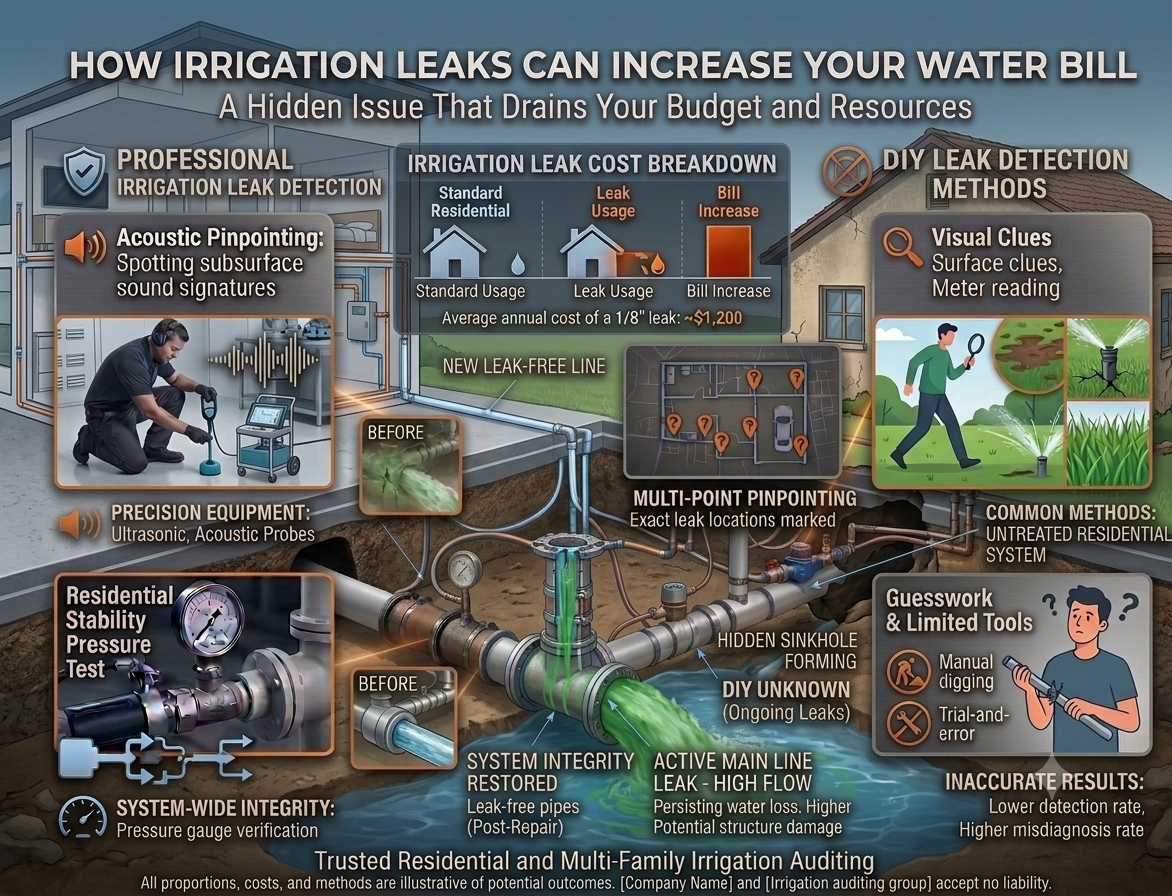
Professional Irrigation Leak Detection vs. DIY Methods

An irrigation leak can waste significant amounts of water without being immediately obvious. A damaged underground pipe, leaking sprinkler line, broken fitting, or faulty valve can allow water to escape beneath your lawn or landscaping.
Some irrigation problems can be identified with a simple visual inspection or a few basic checks. However, hidden underground leaks can be much more difficult to locate without specialized equipment.
So when should you investigate an irrigation leak yourself, and when should you call a professional?
This guide compares professional irrigation leak detection vs. DIY methods so you can understand what you can safely check yourself and when professional detection may be the better option.
Suspect an irrigation leak? Call Water Shield Leak Detection at 510-930-8063 to discuss your situation.
What Is Irrigation Leak Detection?
Irrigation leak detection is the process of identifying where water is escaping from an irrigation or sprinkler system.
Leaks can occur in several places, including:
-
Underground irrigation pipes
-
Sprinkler heads
-
Pipe connections
-
Valves
-
Fittings
-
Irrigation control components
-
Damaged or cracked pipes
-
Connections between irrigation zones
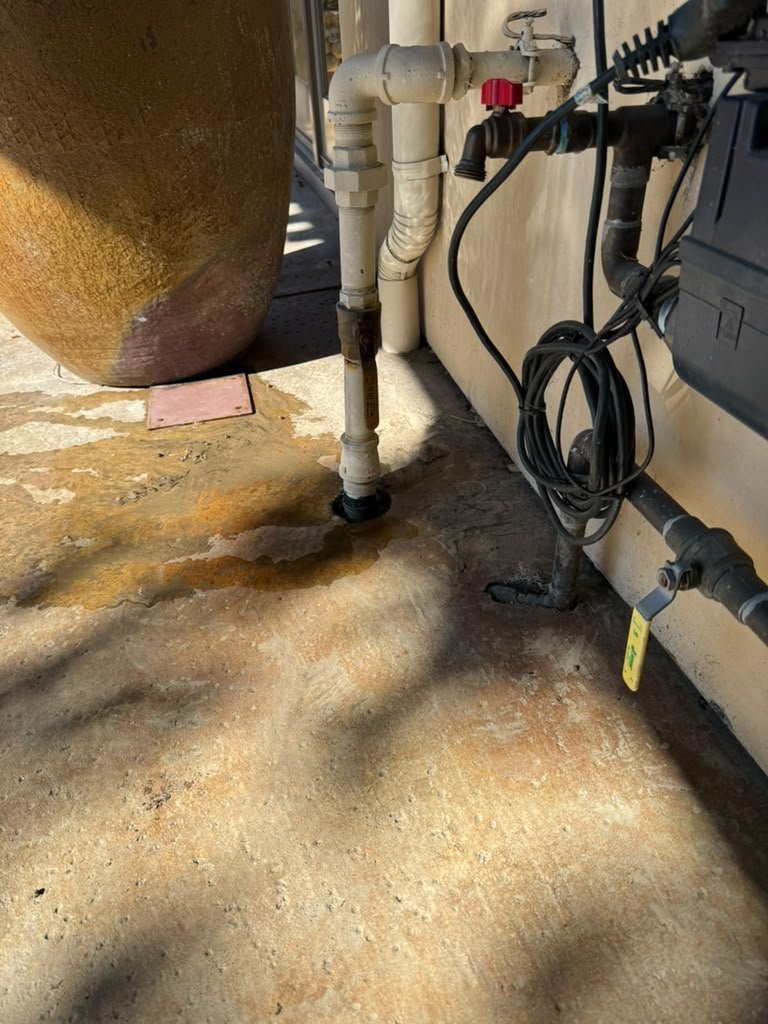
Some leaks are easy to see. Others occur underground and may only show up through changes in your landscaping, water usage, or irrigation performance.
That is why identifying the location and source of an irrigation leak can sometimes require more than a visual inspection.
DIY Irrigation Leak Detection: What Can You Check?
Before calling a professional, homeowners can perform several basic checks.
These checks can help determine whether your irrigation system may have a leak.
1. Look for Unusually Wet Areas
Walk around your property after the irrigation system has been turned off.
Look for:
-
Muddy areas
-
Standing water
-
Constantly damp soil
-
Water pooling around sprinkler heads
-
Wet areas that remain damp when surrounding soil is dry
An isolated wet area can sometimes indicate that water is escaping from an underground irrigation line.
However, drainage problems, recent rainfall, or overwatering can create similar symptoms
2. Check for Unusually Green Grass
A hidden underground leak may provide additional water to one section of your lawn.
You may notice:
-
One unusually green section of grass
-
Grass growing faster in one area
-
Plants growing differently along a particular line
-
An unusually healthy-looking patch surrounded by dry landscaping
This can be an important clue, especially when the irrigation system is not currently running.
For more information, see our guide on 5 Signs Your Sprinkler System Has a Hidden Water Leak.
3. Inspect Sprinkler Heads
Turn on each irrigation zone and inspect the sprinkler heads.
Look for:
-
Broken sprinkler heads
-
Water spraying in the wrong direction
-
Water pooling around a sprinkler
-
Weak spray patterns
-
Damaged components
-
Water continuing to flow after the zone shuts off
A damaged sprinkler head can often be repaired without professional leak detection.
However, if the visible components appear normal and water is still being lost, the problem may be underground.
4. Check Your Irrigation Valves
Valves control the flow of water through different irrigation zones.
Look for signs such as:
-
Continuous dripping
-
Water around the valve box
-
A valve that does not shut off properly
-
Unusual water flow after the irrigation cycle ends
A faulty valve can sometimes be identified through a basic inspection.
If the source of the water loss is not obvious, further testing may be necessary.
5. Monitor Your Water Usage
An unexplained increase in water usage can be another indication of an irrigation problem.
Compare your recent water bills with previous months and consider:
-
Has your water consumption increased?
-
Has your irrigation schedule changed?
-
Has rainfall reduced your need for irrigation?
-
Is your water usage still unusually high?
If your irrigation schedule has remained relatively consistent but water usage has increased, an irrigation leak may be worth investigating.
You can also learn more about this issue in our article on How Irrigation Leaks Can Increase Your Water Bill.
When DIY Irrigation Leak Detection May Be Enough
DIY troubleshooting can be useful when the problem is clearly visible and easy to identify.
For example, you may be able to handle the issue yourself if you find:
-
A broken sprinkler head
-
A loose above-ground connection
-
A damaged visible fitting
-
A clogged sprinkler head
-
A clearly leaking valve
-
A damaged component that can be safely replaced
In these situations, professional leak detection may not be necessary.
The challenge begins when the visible components appear normal but water loss continues.
The Limitations of DIY Leak Detection
DIY inspection has an important limitation: you may be able to identify the symptoms without finding the actual underground leak.
Irrigation pipes are often buried beneath:
-
Grass
-
Soil
-
Landscaping
-
Driveways
-
Walkways
-
Mulch
-
Garden beds
A leak can therefore occur without creating an obvious pool of water on the surface.
Water may travel through soil before appearing somewhere away from the actual leak.
This can make it difficult to determine the exact source by looking at the surface alone.
What Is Professional Irrigation Leak Detection?
Professional irrigation leak detection involves systematically testing the irrigation system to identify where water is escaping.
Depending on the property and suspected problem, a professional may evaluate:
-
The irrigation zones
-
Water flow
-
Pressure
-
Visible irrigation components
-
Underground pipe locations
-
Areas showing signs of excess moisture
-
The suspected leak location
The objective is not simply to find evidence of water.
The goal is to narrow down the location of the leak so the necessary repair can be performed with less unnecessary excavation or disruption.
Professional Irrigation Leak Detection vs. DIY: Key Differences
| DIY Methods | Professional Detection |
|---|---|
| Visual inspection | Systematic inspection and testing |
| Check sprinkler heads | Evaluate irrigation zones |
| Look for wet areas | Investigate suspected underground leaks |
| Monitor water usage | Assess water loss and system behavior |
| Inspect visible valves | Evaluate valves and irrigation components |
| Limited ability to locate underground leaks | Specialized methods may help pinpoint hidden leaks |
| Best for obvious problems | Useful when the leak is hidden or difficult to locate |
The right approach depends on the type of problem and how easily the leak can be identified.
When Should You Call a Professional?
Consider professional irrigation leak detection when the problem is not obvious or continues after basic troubleshooting.
1. Your Water Bill Suddenly Increases
If water usage increases without a clear explanation, an irrigation leak may be contributing to the additional consumption.
2. You See Persistent Wet Areas
A wet area that remains after the irrigation system has been shut off deserves further investigation.
3. One Part of the Lawn Is Unusually Green
An isolated area of unusually healthy vegetation can sometimes indicate an underground water source.
4. You Hear Water Running
If you hear water moving when the irrigation system should be off, there may be an ongoing leak or valve problem.
5. The System Loses Pressure
Unexpected pressure changes can indicate a problem somewhere in the irrigation system.
6. You Cannot Find the Source
This is one of the clearest reasons to consider professional assistance.
If you have visible symptoms but cannot identify where the water is escaping, continuing to dig randomly can damage landscaping without necessarily finding the leak.
How Professionals Locate Hidden Irrigation Leaks
The detection process depends on the irrigation system and the suspected location of the problem.
A professional may begin by reviewing the symptoms and inspecting the property.
The process can include:
Step 1: Identify the Symptoms
The technician looks at the areas where you have noticed:
-
Wet soil
-
Excessive vegetation growth
-
Water pooling
-
Unusual water usage
-
Pressure changes
Step 2: Inspect the Irrigation System
Visible sprinkler heads, valves, fittings, and other components are checked for obvious problems.
Step 3: Evaluate the Irrigation Zones
Different zones may be tested to determine whether the water loss is isolated to a particular section of the system.
Step 4: Investigate the Suspected Area
The technician can use the available evidence to narrow down where the underground problem may be located.
Step 5: Pinpoint the Leak
Specialized detection methods may be used depending on the system, property, and suspected leak location.
The goal is to identify the likely leak location before unnecessary excavation or extensive landscape disruption.
Is Professional Irrigation Leak Detection Worth It?
For a visible broken sprinkler head, hiring a professional leak detection specialist may not be necessary.
But the situation can be very different when the leak is underground.
If you cannot identify the source, repeatedly digging different areas of your yard can:
-
Damage landscaping
-
Disturb soil
-
Increase repair work
-
Waste time
-
Still leave the actual leak undiscovered
Professional detection focuses on identifying the source before repair work begins.
For homeowners dealing with a persistent or hidden irrigation leak, this can make the troubleshooting process more targeted.
DIY vs. Professional Irrigation Leak Detection: Which Should You Choose?
The decision largely depends on whether the problem is visible.
Try basic DIY checks when:
-
The leak is clearly visible
-
A sprinkler head is broken
-
A valve is visibly leaking
-
A fitting is obviously damaged
-
The problem is isolated to an accessible component
Consider professional detection when:
-
The leak appears to be underground
-
Your water usage has increased unexpectedly
-
Wet areas keep returning
-
You cannot find the source
-
The irrigation system is losing pressure
-
Multiple areas appear affected
-
You suspect a hidden pipe leak

Leave a Reply